



The most common thing is the musical idiom, the way everything is arranged, the abstractness of the lyrics and the non-linearity, which I think makes the songs more universal, rather than something that I have experienced only. The school guided me to take this craft seriously. I realized how high the standards have to be and how difficult it is to produce music properly.
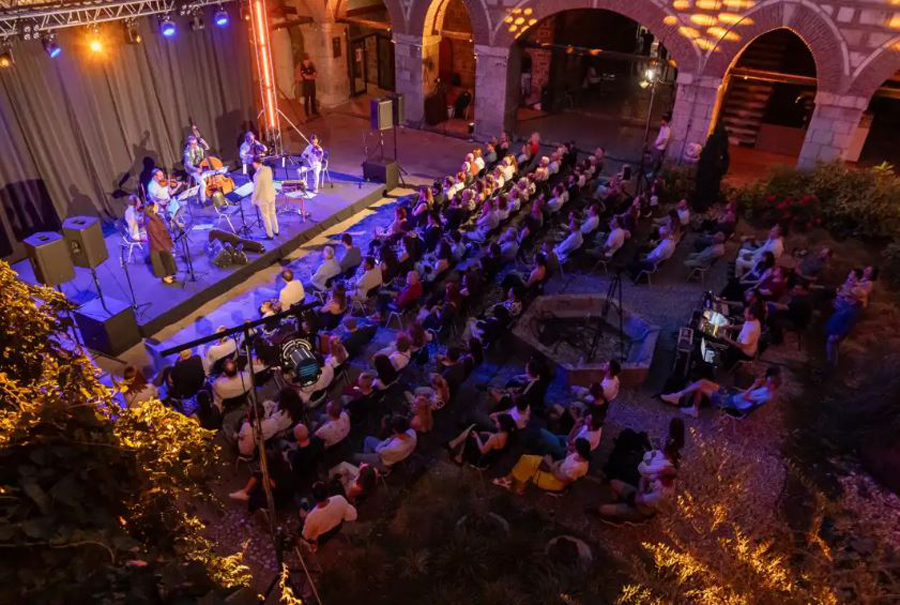
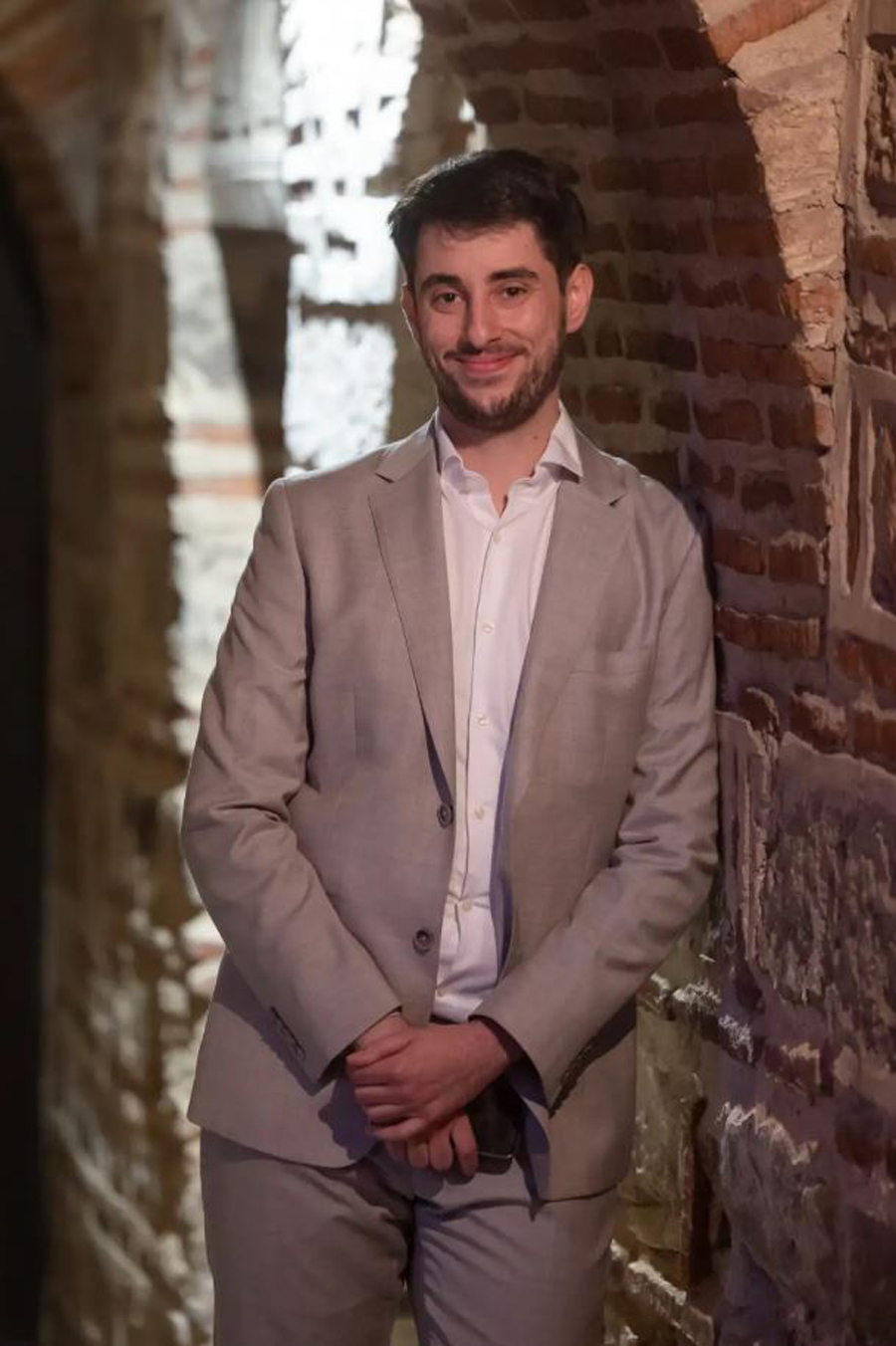
The concert held in Suli An on June 21 promoted the debut album “Kuvendi i Gramatikave” or “Kuvendi i Fëljave” (Conference of Grammars) by Petar Sarkanjac, who graduated from the Berklee College of Music in Boston, United States, in 2023. He is a composer, songwriter and producer of this project, on which he has been working for a decade. The album includes ten songs, which, as the author says, are grammar or poetics for each emotion on the path from non-being to existence (being): will, eternity, community, passion, judgment, determination, anxiety and mercy.
“They should be universal, bare and harsh – that’s why most of ‘Kuvend’ is carried by just voice and a string quintet,” emphasizes the young musician from Skopje during the presentation of his debut album.
The songs are written in five languages: English, Macedonian, Spanish, Portuguese and Turkish, while the music he has composed contains elements of samba, fado, djent (metal) and folklore, arranged for string quintet. In an interview with MIA, Petar Sarkanjac explains that all the songs are guided by the same philosophy, but, as he says, as the album develops, the philosophy itself evolves. “I see myself growing from uncertainty to determination, or from a dark nihilism to a concrete optimism, happy and present in everyday life, instead of remaining trapped in abstract thoughts,” the musician said.
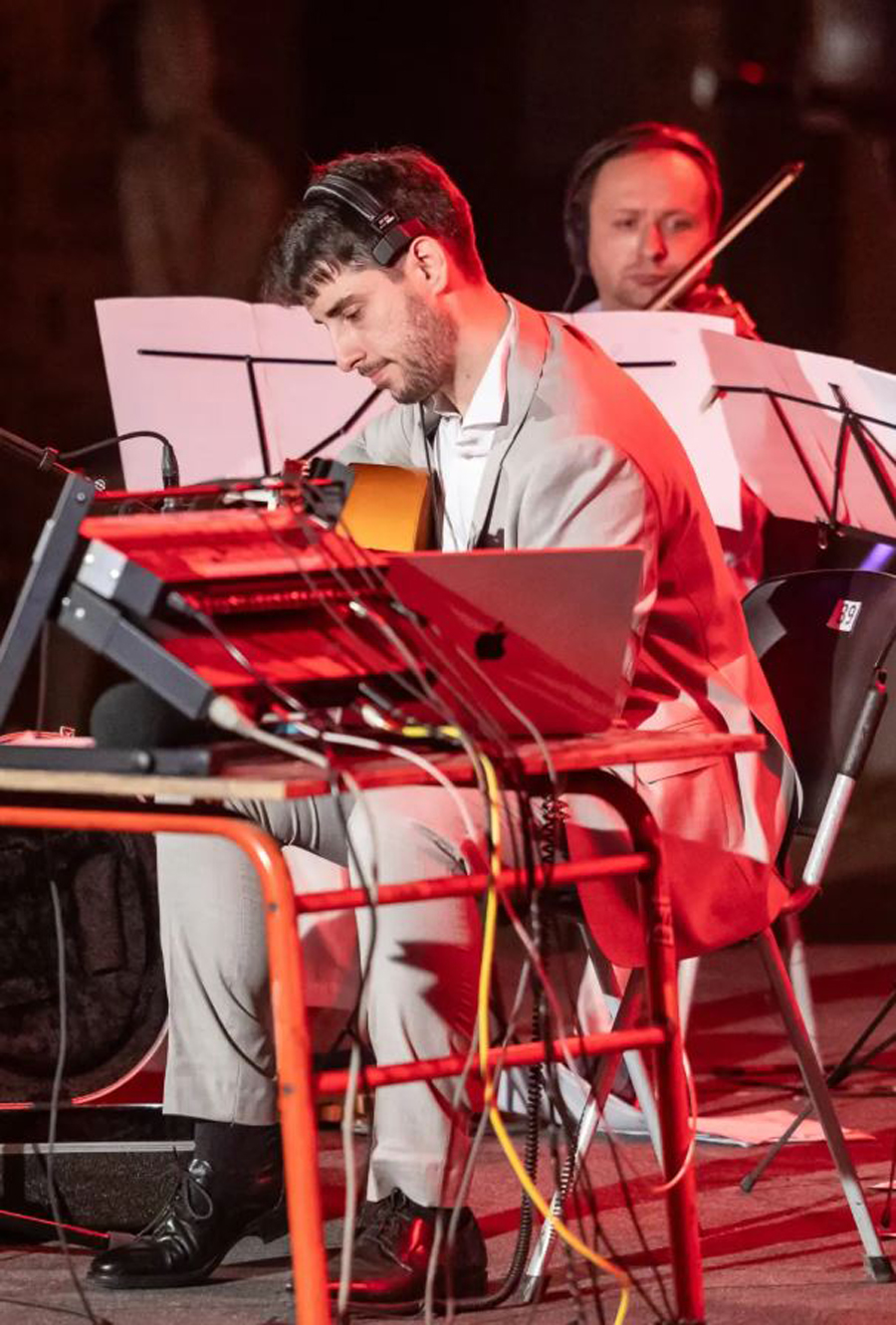
He is very pleased with the concert in which he promoted his debut album, because many people were touched by the emotionality of the music.
The concert held in Suli An featured vocalists and a string quintet (two violins, viola, cello, double bass, and a classical guitar in one of the songs), along with members of the National Opera and Ballet and the Philharmonic. Six days before the concert promotion, the album’s ninth song, titled “Olimp” (or: Gramatika e Mëshirës), performed by Andrijana Janevska, was released.
Petar went to the prestigious Berklee College of Music in Boston after graduating from NOVA High School, where he played in the band led by Ivo Soldatović. He studied piano at the elementary music school, but mainly took guitar lessons from Bojan Trajkovski, Adi Imeri and Darko Tasev.
Regarding his studies at Berklee, he says they guided him to take his craft seriously and to understand how high the standards in music production should be. There he completed dual studies – in the direction of Arrangement, Production and Composition (Contemporary Writing and Production), which, as he says, was inspired by the versatility of the legendary producer Quincy Jones, as well as in the direction of Game Audio and Interactive Media Scoring, a new program opened at Berklee just when he began his studies.
In this interview, the young author also talks about his professional plans, where he intends to build his musical career, and the music he listens to in his free time.
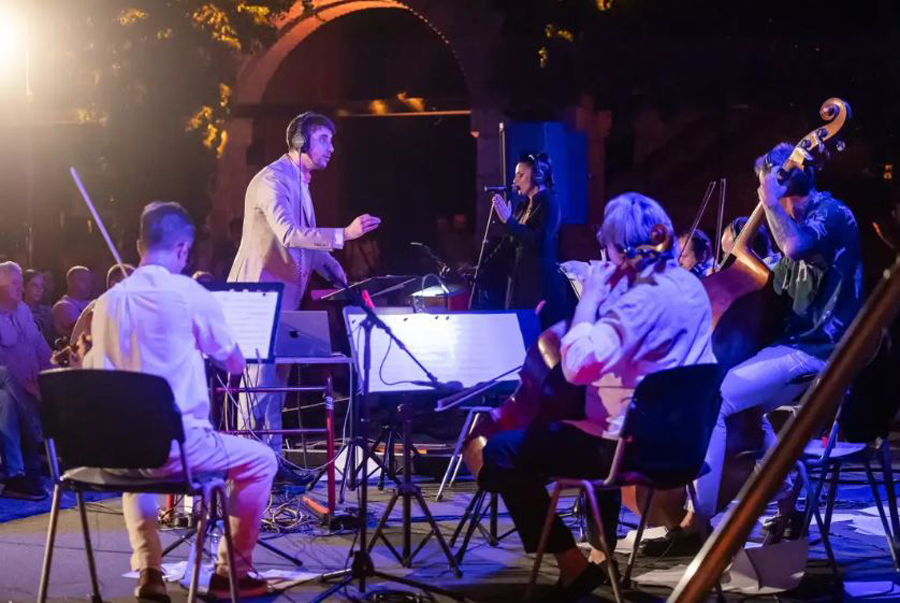
The album, on which you worked for ten years, was presented to the public on June 21st in Suli An. Did the audience’s reactions match your expectations? Are you satisfied with the concert promotion?
Sarkanjac: Many people were touched. I am still not fully aware that music is so emotional and that it can touch someone so much. I was extremely touched by the reactions of the audience at the concert. Many people approached me after the concert with tears in their eyes. I am very pleased, but there is always room for improvement. I will try to make the next concert even better.
The songs are diverse in terms of genre, as you say yourself – songs for every emotion, the lyrics are in several languages, created in different periods and circumstances… What do they have in common, what holds them together under the title “Assembly of Words”?
Sarkanjac: The most common thing is the musical idiom, or the way everything is arranged, the abstractness of the lyrics, and the non-linearity, which I think makes the songs more universal, rather than being something that only I have experienced.
They are all driven by the same philosophy, but as the album progresses, so does the philosophy itself. I see myself growing from uncertainty to determination, or from a dark nihilism to a concrete optimism, happy and present in everyday life, rather than being stuck in abstract thoughts.
Was it a challenge for a young musician to be the full author of his first album – working on the lyrics, music, and song arrangements himself?
Sarkanjac: It was a challenge. I checked everything hundreds of times: the tunings, the scores, the lyrics, the mixes, and still there is always something to improve. I worked on the arrangements, lyrics, and music myself, but I had help with the recording and editing.
I recorded the vocals in Boston through online sessions, while I recorded the string quintet and some vocals in Skopje, at Antonie Veskovski’s studio.
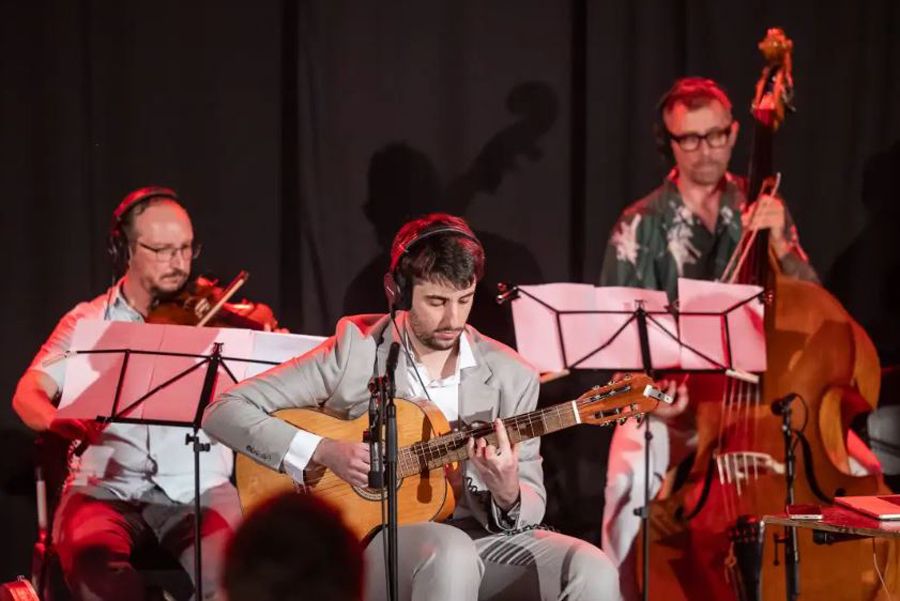
How much did your education at Berklee shape you as an author, and how much did it change the creative preoccupations and musical interests you had before going to study at this prestigious music college?
Sarkanjac: I had no idea how the music world worked before I went there. I was creating more for myself and had no intention of perfecting my craft or finalizing any work. The school guided me to take this profession seriously. I realized how high the standards have to be and how difficult it is to produce music properly.
In addition, some courses were extremely inspiring. I wrote one of the songs in the Songwriting for Social Change course, where the main goal was to write a song that addresses or comments on a global issue by the end of the semester. My colleagues inspired me a lot. One of them presented a song with an extraordinary dynamic development and a perfect structure. This influenced the creative process of the song “Olymp”. Another colleague inspired me to create a drum arrangement with a similar contrast between the sections, which was very important for “Askance”.
Before I went there, I was scattered in many directions and unfocused. I learned different languages and read different philosophies. It was nice, but unstructured. In college, this versatility was somewhat neglected, because the lessons took up a lot of time. Now I have managed to find a good balance between casual interests and craft.
What are your professional plans? Where would you like to build your musical career?
Sarkanjac: At the moment, Macedonia is a good springboard. It’s nice, but I think a bigger audience can be found abroad. I mainly believe that in Europe and America you can build a career with music like the one I make.
What music do you listen to in your free time? Do you have any favorite authors or songs?
Sarkanjac: I haven’t been listening to much music lately. I need a break and I usually listen to light music, mostly pop. During my conducting classes at the university, I fell in love with “Petit Poucet” from Ravel’s “Ma mère l’Oye”, Stravinsky’s “The Firebird” and “Petrushka”, as well as Tchaikovsky’s opera “Romeo and Juliet”.
I adore John Adams. I find myself most in his musical idiom, especially in “Harmonielehre” and “Short Ride in a Fast Machine”. I adore Brazilian music. A professor at the faculty introduced me to the song “Adeus América” from the album “In Tokyo” by João Gilberto. It is my favorite Brazilian song, along with the arrangements of the group “Trio Esperança”, which I used to listen to in the car as a child. I grew up with “Metallica” and “Meshuggah”, so they are very important bands for me. Of the metal bands that I listen to today, the most favorite is “Vildjarta”. While my favorite metal song is “Cemetery Gates” by the group “Pantera”.